Veterinary Authorisation of Human Medicines/Prescription Medicines (PMs)
Veterinarians play a critical role in the judicious use of human medicines for animal care.
A veterinarian may need to authorise human prescription medicines (PMs) for animal use when there is no suitable veterinary medicine available (labelled or off-label). The Vet Council has a statement on the Discretionary Use of Human and Veterinary Medicines by Veterinarians - VCNZ Standards, which has information on the steps that must be followed for discretionary use.
Following the established guidelines and evaluating associated risks helps to ensure the safe and effective use of these medications. It’s also essential to understand and comply with the regulations and guidelines around the authorisation and supply. When authorising PMs, vets need to determine whether or not the PM is a controlled drug because a different periods of supply applies.
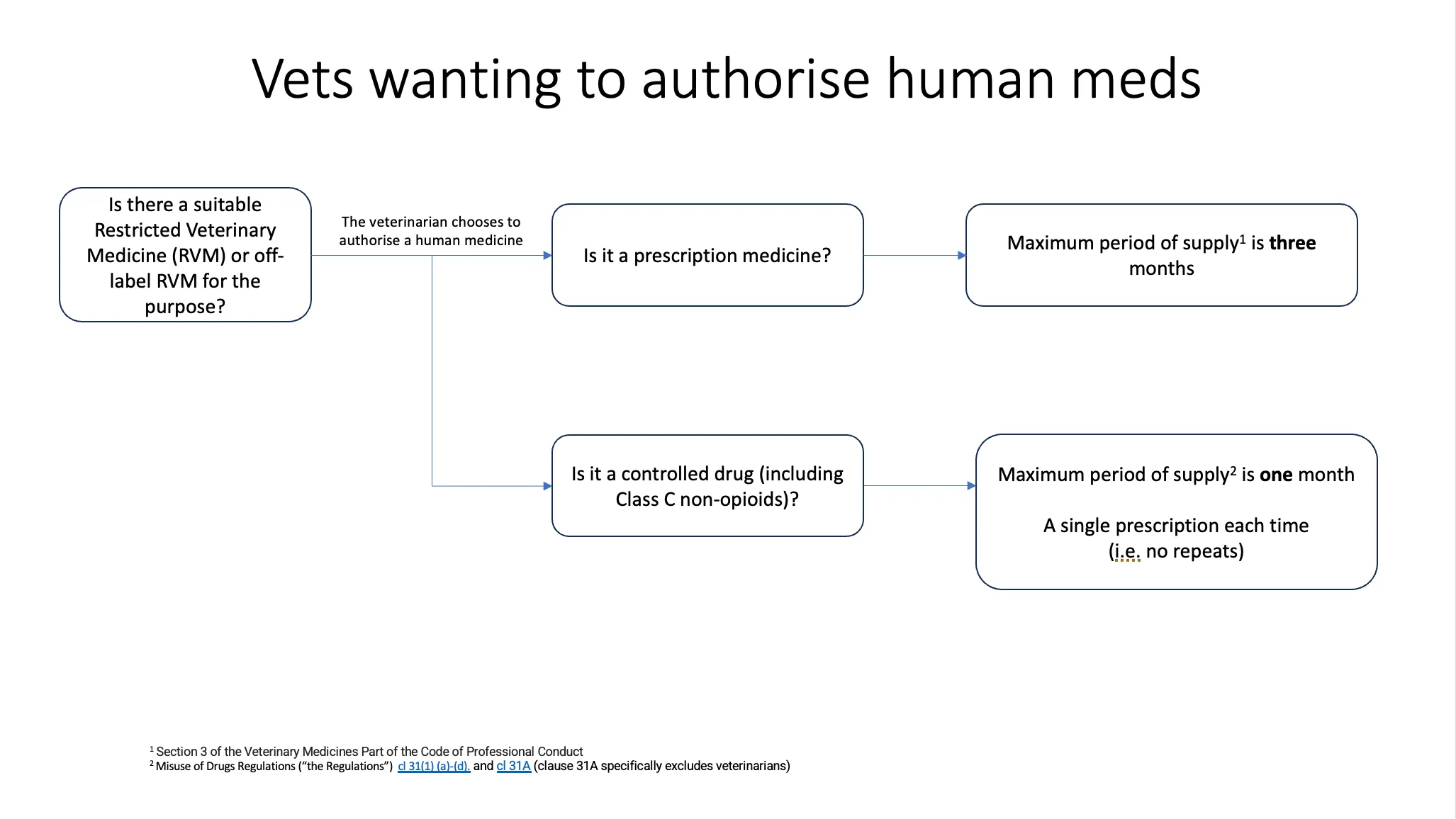
The Database of Medicine Classifications is a useful website that allows people to search for the classification of different drugs. Once you have the classification, follow the flowchart below to determine the maximum period of supply.
Non-controlled Drugs
A human prescription medicine that is not a controlled drug can be authorised for a maximum supply period of three months. The amount of drug that is authorised and dispensed each time will be judged by the veterinarian, up to a maximum of three months' supply. An example of this is Gabapentin.
Controlled Drugs
The maximum period of supply for any controlled drug is one month, with no repeats. While this represents the maximum limit, veterinarians must evaluate the risks for each case and, consequently, may decide to dispense less than one month’s supply at a time. Phenobarbitone is an example of a controlled drug and therefore has a maximum period of supply of one month.